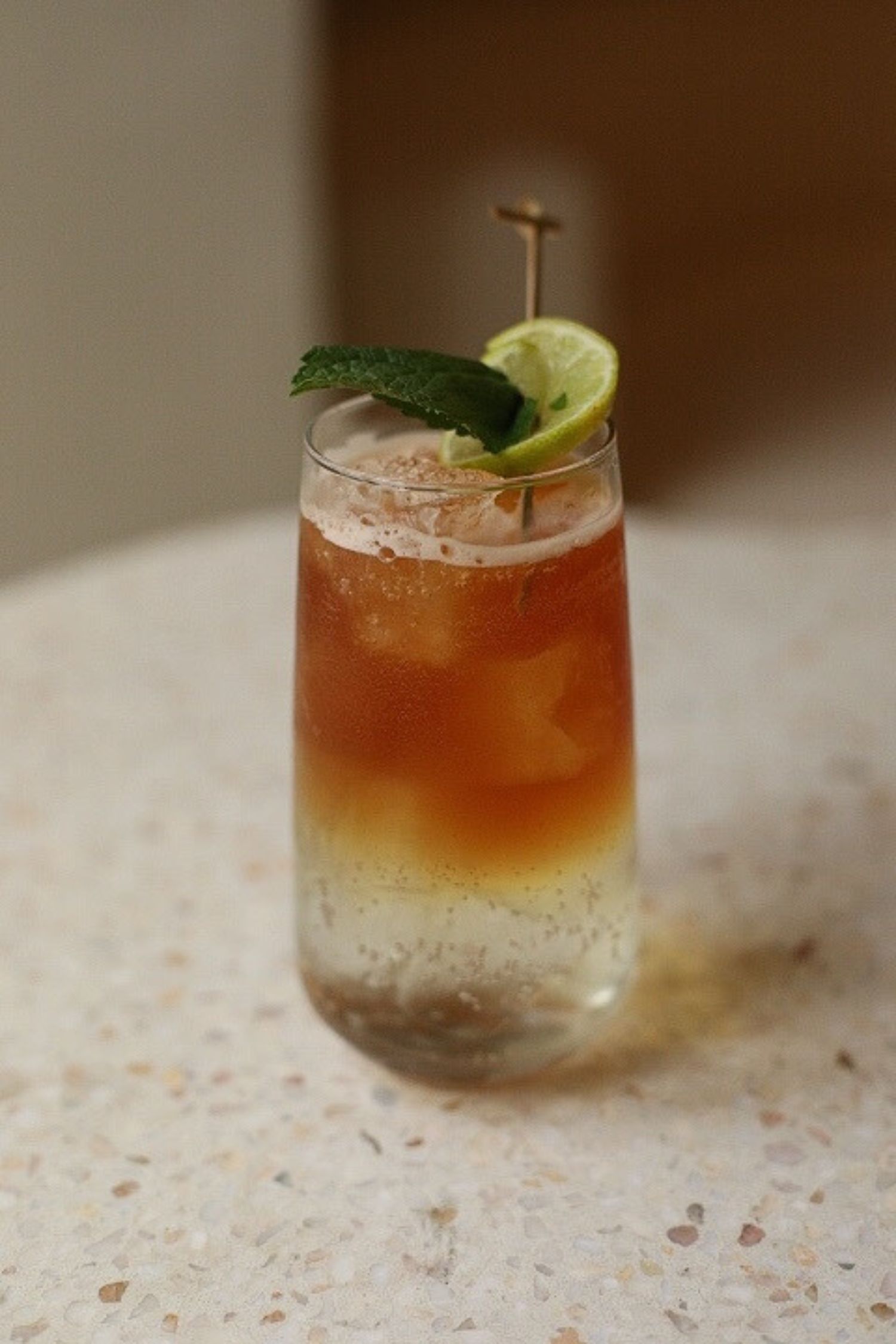
Alchemical Resurrection: The Bloody Mary Compendium in the Lastriko Garden
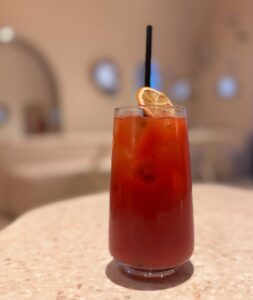
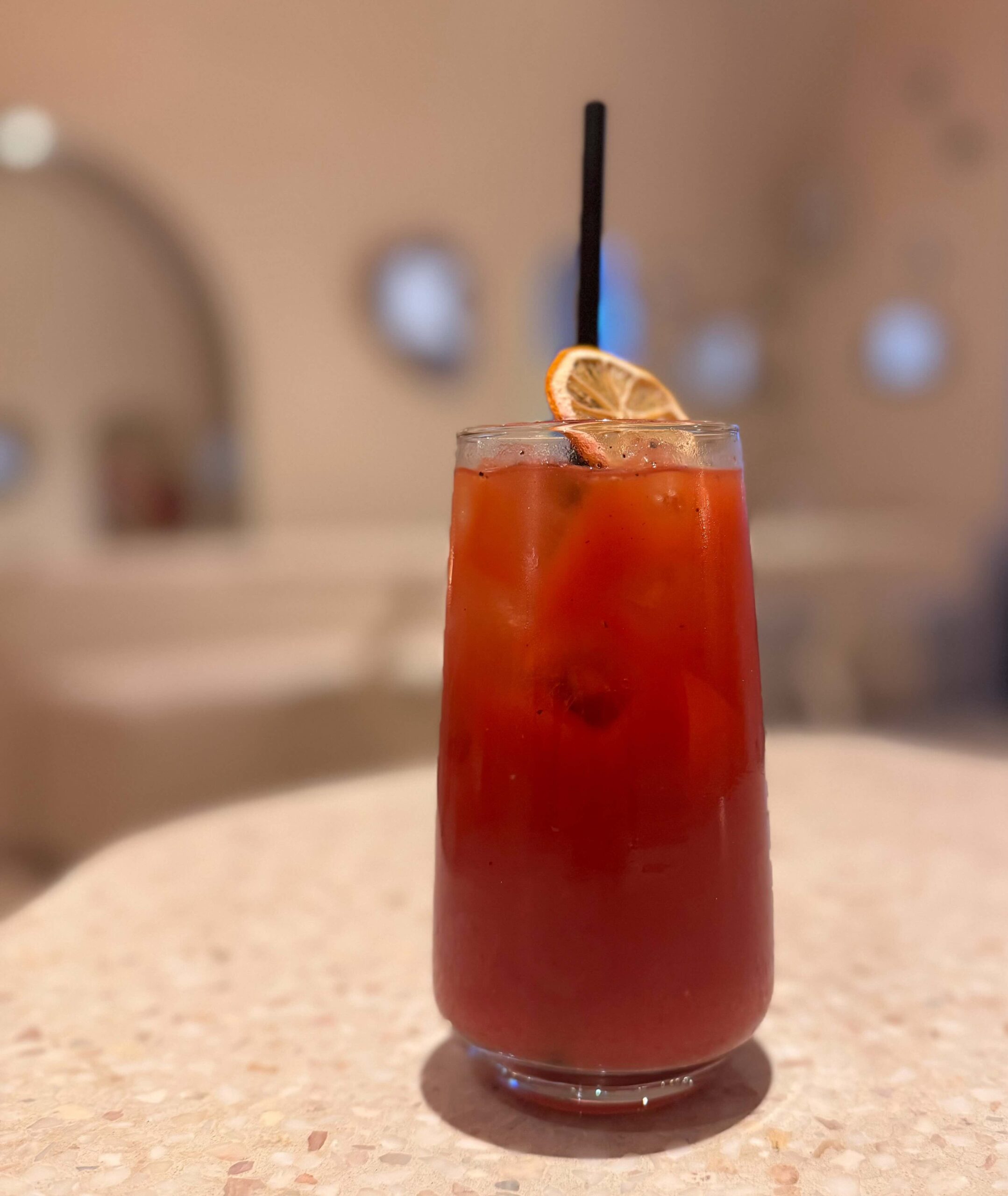
Signature Bloody Mary at Lastriko in Krakow Old Town.
Kraków, the historic heart of Poland, has been undergoing a fascinating metamorphosis in the spheres of gastronomy and Krakow nightlife for years. The traditional image of the city, dominated by basement vodka spots and a typical pub Krakow, is evolving toward a sophisticated mixology scene that successfully competes with European capitals like Berlin or London. Phrases such as cocktailbar Krakow or best cocktail bars Krakow are no longer just typed by foreign tourists looking for a “happy hour”; they have become a symbol of the search for quality, authenticity, and unique sensory experiences by conscious consumers scouring the list of bars in Krakow.
In this dynamic ecosystem, Lastriko at 6 Gołębia Street occupies a special position among Krakow old town bars. As a central hub and a renowned cocktailbar Krakow, this venue balances on the border of two worlds: a daytime bistro serving exquisite breakfasts and a night club pulsing with house music. It is precisely in this duality that the potential of one of the most iconic, yet often underestimated cocktails in history lies: the Bloody Mary. This is not an ordinary drink served by an average pub Krakow; it is a cultural artifact that combines the history of 1920s Parisian bohemia, the New York elegance of St. Regis hotels, and a raw, Slavic soul represented by horseradish.
It is here in Lastriko, amidst the lush greenery of a spacious patio and in cool, minimalist interiors evoking the aesthetics of terrazzo (lastryko), that a specific ritual is celebrated. A ritual focused around a glass of crimson liquid with a complex flavor profile, known to the world as the Bloody Mary. At Lastriko, this cocktail is not just a menu item distinguishing this cocktailbar Krakow; it is a cultural institution, a pharmacological miracle, and a culinary masterpiece. It is not a simple mixture of vodka and juice, but a precisely calibrated infusion: Absolut Blue vodka infused with horseradish, combined with rich tomato juice and sharpened with Tabasco. This specific formula is not a matter of chance. It represents the convergence of history, molecular chemistry, and the specifically Polish cultural concept of the “klin” (wedge) — or what the Anglosphere calls “hair of the dog.”
Part I: The Sociology of the “Klin” and Polish Hangover Physiology
The “Klin Klinem” Concept in a Cultural Context
To fully understand the phenomenon of the Bloody Mary at Lastriko—a standout among bars in Krakow—one must first explore the cultural landscape of drinking in Poland and Central Europe. The Polish approach to the “morning after” is linguistically and philosophically distinct from the Western concept of a “hangover cure.” 16The phrase klin klinem (literally “driving out a wedge with a wedge”) refers to the method of removing a stuck object by driving another object into the same place. It is a mechanical metaphor, suggesting forceful, effective, and pragmatic action — qualities that any self-respecting venue in Krakow nightlife should possess.
While American culture often looks at morning drinking with Puritan skepticism — rebranding it as “brunch” to make it socially acceptable — Slavic cultures have historically recognized a physiological continuity between the night and the morning. In Bulgarian, the phrase is “Klin klin izbiva,” and in Russian, the term “klin” is also used. The “klin” is a functional tool. It is not about intoxication, but about stabilization, about returning to homeostasis, which is perfectly understood by any professional cocktailbar Krakow.
In the context of Krakow nightlife — a city that boasts one of the highest densities of bars and pubs per square meter in the world — the “klin” becomes a social necessity. The city’s social life revolves around the fluid transition from stuffy locales typical of a pub Krakow to sunny café gardens and places like this city-center bar.
The Physiology of Relief: Why Does the Bloody Mary Work?
Why has the Bloody Mary, and not another cocktail, earned the title of the ultimate “klin,” and why do the best cocktail bars Krakow have it in their repertoire? The answer lies in its biphasic influence on the human body, which can be broken down into three key mechanisms: 25
-
Reintroduction of Ethanol (Metabolic Theory): The “hair of the dog” theory assumes that hangover symptoms are partly caused by alcohol withdrawal and the metabolism of trace amounts of methanol. Many alcoholic beverages contain trace amounts of methanol. The human body preferentially metabolizes ethanol. When ethanol disappears from the bloodstream, liver enzymes (alcohol dehydrogenase) begin to process methanol, leading to the creation of toxic formaldehyde and formic acid — the main culprits of feeling unwell. The reintroduction of a small dose of ethanol (vodka in the Bloody Mary served by a professional cocktailbar Krakow) “occupies” the liver enzymes with reprocessing ethanol, slowing down the formation of toxins from methanol and giving the body time to excrete them more safely.
-
Electrolyte Replenishment (Isotonic Aspect): Unlike Mimosas or Screwdrivers, which are based on fructose sugars, the Bloody Mary is a standard maintained by any good cocktail bar — it is a dry, almost “soup-like” cocktail. Tomato juice is a rich source of potassium, sodium, and lycopene — ingredients that are drastically flushed from the body during alcohol-induced diuresis.1Salt (often celery salt) and sauces (Worcestershire, Tabasco) additionally replenish sodium levels, which helps with water retention and rehydration.
-
Chemesthetic Distraction (Neurobiology of Pain): A key element of the version from Lastriko, distinguishing this venue from other bars in Krakow, is the horseradish infusion and the addition of Tabasco. These ingredients trigger a pain response. This is not taste in the traditional sense (like sweet or sour), but chemesthesis — the chemical sensitivity of the skin and mucous membranes. This sensory “shock” — the burning of capsaicin on the tongue and the hit of horseradish isothiocyanates in the sinuses — stimulates the brain to release endorphins and dopamine. These natural painkillers of the body provide a temporary analgesic effect that masks headaches and general malaise.
At Lastriko, this physiological rescue mission is carried out with pharmaceutical precision, confirming their status as a high-class cocktailbar Krakow. The choice of infused vodka, rather than simply mixing grated horseradish with juice, is critical. It ensures that the active compounds are already dissolved in ethanol, providing rapid and uniform delivery of relief, without the need to “chew” pieces of root, which could be unpleasant for a sensitive stomach.
Part II: The Disputed Genesis of Bloody Mary – From Paris to New York
Before the Bloody Mary arrived in the garden at Gołębia Street, it traveled a winding path through history, gathering legends, variations, and controversies. Understanding this pedigree adds depth to every sip at Lastriko, connecting the drinker with a tradition reaching back to the “Roaring Twenties,” a tradition cultivated only by the best cocktail bars Krakow.
The Petiot vs. Jessel Debate
The origin of the Bloody Mary is a classic case of historiographical conflict, focused around two figures: Fernand Petiot and George Jessel.
-
The Case of George Jessel: George Jessel, a Hollywood star, comedian, and celebrity active in the years 1920-1950, is often cited as the creator of the original version of the drink. In 1939, gossip columnist Lucius Beebe published a recipe for “George Jessel’s Pick-Me-Up,” which consisted essentially of vodka and tomato juice. The argument for Jessel’s priority is that he created the base structure — the marriage of spirit and vegetable juice — likely as a primitive hangover cure for his social circle after all-night parties. 45Jessel himself claimed he named the drink after a friend, Mary Geraghty. 46However, his version was considered quite bland and “flat” in taste, which today would not pass in any self-respecting cocktailbar Krakow.
-
The Case of Fernand Petiot: Fernand Petiot, a bartender working at the legendary Harry’s New York Bar in Paris in the 20s, and later at the St. Regis Hotel in New York, is widely recognized as the one who perfected the drink and gave it the cocktail form we know today. Petiot acknowledged Jessel’s role in combining the liquids but claimed ownership of the seasoning. In a 1964 interview, Petiot stated: “George Jessel said he created it, but it was really just vodka and tomato juice when I took it over.” Petiot’s innovation lay in a culinary approach to the cocktail. He treated the glass like a soup bowl, adding salt, black pepper, cayenne pepper, Worcestershire sauce, and lemon juice. This transformation from a simple mixture into a complex, spicy elixir marked the true birth of the Bloody Mary.
The version from Lastriko, which defines this cocktailbar Krakow, with an emphasis on horseradish infusion and Tabasco, is a direct spiritual heir to Petiot’s “spicing it up” philosophy, pushing the flavor profile even further toward dryness and piquancy.
Naming Myths: Blood, Queens, and Waitresses
The etymology of the name “Bloody Mary” is as murky as tomato juice itself. 54Three main theories dominate the discourse, and each adds a different “flavor” to the story of the drink, told at the bar of every good pub Krakow:
-
Royal Connections (Mary Tudor): Perhaps the most dramatic theory claims the drink was named after the Queen of England, Mary I Tudor, known as “Bloody Mary” due to her brutal persecution of Protestants in the 16th century. Tomato juice symbolizes the blood of martyrs. Although historically suggestive and adding Gothic charm, there is little evidence connecting a 20th-century American cocktail with a 16th-century monarch, other than the coincidence of nicknames.
-
Bucket of Blood: Another theory suggests the name comes from the “Bucket of Blood” saloon in Chicago. Legend has it that Petiot served the drink to two customers from Chicago at the King Cole Bar in New York. The red liquid reminded them of a waitress named Mary who worked at the Bucket of Blood, a place of ill repute known for fights and blood on the floor. This ties the drink to the raw, masculine world of American saloons, distant from the elegance presented by a modern cocktailbar Krakow or a hidden speakeasy Krakow.
-
Hemingway’s Ruse: A more literary theory concerns Ernest Hemingway. It is said that just before his wedding to Mary Welsh, doctors (or Mary herself) forbade him from drinking. Petiot mixed him vodka with tomato juice because the intense smell of spices and tomatoes masked the scent of alcohol. While drinking it, Hemingway supposedly mumbled “Bloody Mary,” referring to the severity of his wife. 64This story, told by the great-grandson of Harry MacElhone, adds a literary flair to the drink.
Regardless of the true origin, the name stuck permanently, becoming synonymous with morning regeneration in every city center bar.
Part III: The Science of Infusion – Absolut Blue and Horseradish (Armoracia rusticana)
The distinguishing feature of the Bloody Mary at Lastriko — which places this venue at the forefront of bars in Krakow — is its base: Absolut Blue vodka infused with horseradish. This is a significant departure from standard recipes that simply add ready-made horseradish from a jar to tomato juice. This section analyzes why this infusion technique is superior and the chemistry behind it.
Choice of Spirit: Absolut Blue and the Heritage of Purity
The recipe explicitly points to Absolut Blue. This is not a random choice, but one rooted in the history of high-quality distillation, valued by every self-respecting cocktailbar Krakow.
Heritage of Purity of L.O. Smith: Absolut vodka traces its heritage to Lars Olsson Smith, who revolutionized the industry in 1879 by introducing “Absolut Rent Brännvin” (Absolutely Pure Vodka). Smith used the continuous distillation method (rectification), which removes fusel oils and impurities much more effectively than traditional alembics. In the case of the Bloody Mary, the purity of the base is key. The vodka must provide a clean, neutral canvas that can lift the weight of the spices without adding its own harsh alcoholic “burn” that could compete with the horseradish.
Chemistry of Horseradish: Why Infusion, Not Mixing?
The decision to infuse vodka with horseradish instead of mixing it directly with juice is scientifically justified and testifies to the knowledge of the bartenders in this entrant for the best cocktail bars Krakow. It utilizes the chemical properties of the horseradish root to maximize flavor potency and stability.
-
The Isothiocyanate Reaction: Horseradish itself is not spicy until it is damaged. The root contains a compound called sinigrin (glucosinolate) and an enzyme called myrosinase. In the intact plant, they are separated in cells. When the root is grated or cut, cell walls break, and myrosinase acts on sinigrin, producing allyl isothiocyanate (AITC). It is AITC that is the volatile oil responsible for the biting, sinus-clearing heat of horseradish.
-
The Volatility Problem and Alcohol Solution: AITC is highly volatile and unstable. If horseradish is grated directly into tomato juice, this compound begins to degrade and evaporate upon contact with air, losing its “kick” in just 30 minutes. However, AITC is perfectly soluble in ethanol.
By infusing horseradish directly in Absolut vodka, Lastriko — as an innovative cocktailbar Krakow — achieves three goals:
-
Solvent Extraction: The high alcohol content in vodka acts as a powerful solvent, extracting essential oils and AITC from the root much more effectively than water or juice. This process allows for pulling out a depth of flavor impossible to obtain by simple mixing, differentiating this drink from what is served in an ordinary pub Krakow.
-
Preservation (Fixation): Alcohol “traps” the volatile compounds, preventing them from oxidizing and evaporating as quickly as they would in open air. This allows for maintaining the “sharp, sinus-clearing” profile that is the hallmark of an outstanding Bloody Mary.
-
Flavor Integration: When infused vodka is mixed with tomato juice, the piquancy is molecularly distributed throughout the drink, rather than appearing as fibrous root lumps settling at the bottom of the glass.This ensures a silky texture while maintaining a powerful flavor punch.
Part IV: The Umami Backbone – Tomato and Tabasco
While the infused vodka provides structural integrity and impact, the soul of the Bloody Mary in this bars in Krakow staple lies in the red mixer.
Tomato: A Fruit of Complex Nature
The user query specifies “tomato juice.” In the context of the cocktail, this juice acts as a suspension medium for the spices. But chemically, it provides an umami flavor profile. Tomatoes are one of the richest natural sources of free glutamic acid. The interaction between horseradish and tomato is key here. Horseradish, with its “earthy” root notes, grounds the acidity of the tomato, while the natural sweetness of the tomato balances the sharpness of the radish. Moreover, studies suggest that isothiocyanates from horseradish may react with pectins in tomatoes, affecting the texture (“gelling effect”), making the cocktail served at Lastriko, popular as a center bar, seem more substantial and filling.
Tabasco: The Louisiana Standard of Fermentation
The inclusion of Tabasco is a nod to classic recipes from the 1930s. Tabasco is a sauce made from peppers fermented in oak barrels for three years. This fermentation process adds a layer of acetic acidity that brightens the heavy texture of tomato juice. Acetic acid “cuts” through the viscosity of the juice, making the drink more refreshing. At Lastriko, the use of Tabasco allows guests to adjust the spice level (though bartenders serve a balanced version), but the base presence of the sauce ensures a minimal level of heat necessary to stimulate circulation — a feature appreciated by patrons of the best cocktail bars Krakow.
Part V: Context of Place – Lastriko as an Experience Space
Brunch Culture in Krakow and the Menu
Kraków is experiencing a bloom in breakfast and brunch culture, moving away from simple sandwiches towards elaborate meals. Lastriko serves breakfasts until 4:00 PM, which is a nod to the urban rhythm of life, often assuming late rising and the search for the perfect bars in Krakow for regeneration.
Food Pairing Recommendations: The Bloody Mary is a heavy, dry drink. It requires food that can match its intensity. The Lastriko menu offers several ideal partners:
-
Croque Monsieur: Lastriko’s version of this French classic is advertised as “breakfast in the center of Krakow.” The richness of cheese, ham, and béchamel sauce is perfectly cut by the acidity of the tomato juice and the sharpness of the horseradish vodka. 104The crunch of the toast contrasts with the liquid velvet of the drink.
-
“Happy from Kentucky”: This dish, containing a waffle with juicy chicken and chili honey, offers a sweet-salty interaction. The Bloody Mary acts here as a bridge between the savory chicken and the sweet honey, with the chili in the honey echoing the capsaicin from the Tabasco in the glass. This is a combination worthy of the best bars in Krakow.
-
Finger Foods and Tapas: For those not ready for a full meal, tapas and snacks mentioned in the bistro menu are ideal companions. The salty profile of small snacks harmonizes with the sodium content in the cocktail.
Part VI: Bloody Mary in a Global and Local Context
To fully appreciate the Bloody Mary from Lastriko, it is worth comparing it with its siblings in the cocktail world and with the competition in the Krakow nightlife scene, where Lastriko stands out as a cocktailbar Krakow with its own character.
Variations on a Theme: Why Vodka and Horseradish?
The Bloody Mary has spawned an entire family of dry cocktails. Understanding the differences highlights the unique character of the Vodka/Horseradish version served on Gołębia Street, distinguishing it from the offerings of a typical pub Krakow.
|
Cocktail Name |
Base Alcohol |
Key Difference |
Comparison with Lastriko |
|
Red Snapper |
Gin |
Botanic notes of juniper. |
Gin often “clashes” with horseradish. Lastriko’s vodka version is cleaner, allowing the horseradish to dominate. |
|
Bloody Maria |
Tequila |
Earthy notes of agave. |
Tequila fits Mexican cuisine, but lacks the “clinical” precision of vodka as a Slavic-style hangover cure. |
|
Michelada |
Beer (Lager) |
Lighter, fizzy, less alcohol. |
Popular in heatwaves, but lacks the “kick” of vodka necessary in the Polish “klin”. |
|
Lastriko Bloody Mary |
Infused Vodka |
Horseradish (AITC) |
A local adaptation worthy of a top drink bar Krakow. Uses fundamental ingredients of Polish cuisine (vodka, horseradish), creating an authentic, regional “power drink”. |
The version from Lastriko remains true to the Slavic roots of the region, sticking to Vodka (Absolut) and Horseradish, ingredients that are pillars of the Polish table. It is a localized adaptation of an international classic.
Summary: The Ultimate “Klin” Among Bars in Krakow
The Bloody Mary at Lastriko is something more than the sum of its ingredients. It is a convergence:
-
History: Carrying the legacy of Fernand Petiot and St. Regis, but adapted to the Slavic palate.
-
Science: Utilizing the solvent properties of Absolut Blue vodka to extract and fix volatile isothiocyanates from fresh horseradish — the hallmark of an innovative cocktailbar Krakow.
-
Culture: Embodying the Polish philosophy of the “klin” — a dignified, communal, and effective way to regenerate after a night in the best cocktail bars Krakow.
-
Atmosphere: Served in a garden oasis that offers a psychological “reset” button for the tired traveler or partying local resident.
For a guest visiting 6 Gołębia Street, the order is simple, but the experience is profound. When the glass hits the table — often with celery, radish, or pickles — and spreads the sharp scent of horseradish, it constitutes a promise. A promise that the headache will pass, the appetite will return, and the day, no matter how it started, will be reclaimed in the best style.
Whether you are looking for the “best breakfast in Krakow,” an effective “klin,” or simply a masterclass in dry mixology, the Bloody Mary at Lastriko stands as a testament to the power of simple ingredients raised to the rank of art through technique and tradition. It is not just a drink. It is Lastriko in liquid form — a mixture of rawness and refinement, concrete and greenery, night and day, offered by this unique center bar. If you are wondering where to go for a drink in Krakow, the answer is simple: among all bars in Krakow, visit Lastri
Read also our article about Paloma
Source of the Bloody Mary history: International Bartenders Association.