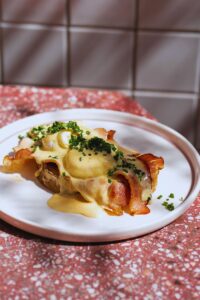
Discover the best brunch in Krakow at Lastriko – iconic Eggs Benedict served on waffles or artisan bread.
Eggs Benedict: The Battle for Origins, the Recipe for Perfection, and Why Breakfast Krakow Loves Is Anything but Traditional
Introduction: More Than Breakfast – A Cultural Icon of Brunch
There’s a moment — almost a ritual — that defines the weekend brunch experience. The moment when your fork gently pierces the perfectly elastic egg white, releasing a cascade of deep golden yolk. It flows like liquid gold, merging with the velvety, buttery-lemon hollandaise sauce that envelops everything beneath it.
This isn’t just a meal. It’s an event.
Eggs Benedict is the undisputed king of global brunch menus — a dish that has become an international symbol of weekend luxury, culinary indulgence, and unhurried mornings.
But have you ever wondered where this icon actually came from? Like most legends, its story is messy — full of contradictions, New York scandals, competing claims of invention, and culinary turf wars.
And the classic we know today is quietly undergoing a revolution.
Let’s explore the mysteries behind this dish and understand why finding the perfect Breakfast & Brunch in Krakow is so exciting. This story takes us from the glitz and chaos of 19th-century New York straight to the heart of Krakow’s Old Town.
The Birth of a Legend: Who Was Benedict, Really?
The history of Eggs Benedict is far from simple. It’s the story of two great New York institutions locked in a decades-long battle for authorship. As with most legends, the truth depends on whom you ask.
Culinary historians agree on just one thing: the dish was born in New York at the turn of the 19th and 20th centuries.
Myth 1: The Waldorf Cure for a Hangover (1894)
The first story is almost democratic — born out of pure necessity. It’s 1894.
Lemuel Benedict, a retired Wall Street broker, walks into the luxurious Waldorf-Astoria hotel, suffering from a brutal hangover.
Seeking the ultimate cure, he orders a very specific combination: “buttered toast, poached eggs, crisp bacon, and a generous hooker of hollandaise sauce.”
His unusual request catches the attention of the legendary maître d’hôtel Oscar Tschirky (the same man who invented the Waldorf Salad). Oscar is so impressed by this “barbaric” creation that he refines it and adds it to the permanent breakfast and lunch menu — replacing the crispy bacon with elegant ham and the toast with an English muffin.
This story is backed by an interview Lemuel Benedict himself gave to The New Yorker in 1942, claiming full credit.
It’s a “from the people” narrative — genius born out of need, which makes the dish more relatable and human.
Myth 2: Delmonico’s and the High-End Version (1860s)
The second story takes us thirty years earlier to Delmonico’s — the first true fine-dining restaurant in the United States, the birthplace of American haute cuisine.
Among its regulars were Mr. and Mrs. LeGrand Benedict. One day, tired of the usual menu, Mrs. Benedict asked for “something new or different.”
The challenge was accepted by the restaurant’s legendary chef Charles Ranhofer, who created a dish of poached eggs served on English muffins with ham and hollandaise sauce — crowned with freshly grated truffles.
This version is aristocratic, deliberate — the act of a culinary master creating art, not chance. Ranhofer later published the recipe under the name “Eggs à la Benedick” (old spelling) in his monumental 1,200-page cookbook The Epicurean.
The Collision of 1894: How the Classic Was Born
How can these two stories coexist? The key lies in the year — 1894.
Both Ranhofer’s cookbook and Lemuel Benedict’s hangover breakfast date to the same year. Coincidence? Hardly.
That year was not about invention but about convergence — the meeting of two culinary worlds that ensured the dish’s immortality.
From one side, it was formalized and published by America’s most respected chef, giving it haute-cuisine legitimacy.
From the other, it was democratized and popularized by a hotel maître d’ who turned it into an approachable comfort dish.
Eggs Benedict succeeded globally because it carried this dual nature from the very beginning: it satisfied both the refined tastes of the elite and the cravings of ordinary people.
This fusion of luxury and accessibility is the key to its timeless appeal.
(There’s also a third, less likely theory — from The New York Times in 1967 — crediting Commodore E.C. Benedict, a banker and yachtsman. His version, however, included a paste of hard-boiled eggs and ham, making it the least plausible ancestor of the classic we know today.)
Anatomy of Perfection: What Makes the Classic
Regardless of its origin, the classic Eggs Benedict is a symphony of four essential elements — and perfection demands mastery of each one.
Pillar 1: The Base – The English Muffin
Traditionally, this is a split, lightly toasted yeast roll.
Its job is critical: it must be soft and airy, yet strong enough to absorb the sauce and yolk without collapsing into sogginess.
Pillar 2: The Protein – Ham or Canadian Bacon?
The debate has raged since day one. Lemuel Benedict’s original used crispy bacon.
But both Oscar Tschirky’s Waldorf version and Ranhofer’s Delmonico’s version used ham.
Today, the international standard is Canadian bacon — essentially a round slice of tender, cured pork loin.
Pillar 3: The Star – The Poached Egg
This is the technical heart of the dish.
A perfect poached egg must have a fully set but delicate white that envelopes a warm, molten yolk — never overcooked, never runny to excess.
Pillar 4: The Soul – Hollandaise Sauce
This is what elevates breakfast into brunch.
Hollandaise, one of the five “mother sauces” of classical French cuisine, is a delicate warm emulsion of raw egg yolks, clarified butter, and acid (typically lemon juice or white wine vinegar).
It’s notoriously difficult — easy to split or curdle — and its presence on a menu signals real culinary skill.
The Evolution: How “Benedict” Created Its Own Family
The beauty of Eggs Benedict lies in its adaptability — it’s not just a recipe, it’s a platform.
Once the original became famous, variations emerged almost immediately, many of which are now classics in their own right.
Variation 1: Eggs Royale – The Royal Upgrade
Simple swap: replace the ham with slices of smoked salmon.
The salty, silky texture and marine character of salmon create a whole new dimension when paired with rich hollandaise.
Variation 2: Eggs Florentine – A Nod to Florence
The vegetarian version replaces (or complements) the ham with a portion of sautéed or butter-blanched spinach.
Its earthy, mineral notes perfectly cut through the richness of the sauce and yolk, creating ideal balance.
The Modern Revolution: Why the Best Brunches Abandon the Muffin
For decades, the evolution of Benedict focused mainly on the protein layer — ham, salmon, spinach.
But modern chefs realized that the true revolution lies elsewhere — in the base.
Let’s go back to Pillar 1.
The English muffin was revolutionary in 1894 — but it has a flaw: it’s soft, often spongy, and under the weight of hot hollandaise and runny yolk, it collapses into a mushy mess.
Today’s brunch scene has learned that texture and contrast are the real secrets. It’s no longer just about absorption — it’s about resistance.
Trend 1: The Savory Waffle Revolution
The first major innovation: replacing the muffin with a savory waffle.
Why does it work? Because waffles — especially those made from buckwheat or corn flour, or enriched with cheese and herbs — bring crispness and structure.
The waffle’s deep pockets perfectly capture the sauce and yolk, turning each bite into a tiny pool of flavor.
The contrast of crispy golden texture and creamy hollandaise is a sensory masterpiece.
Trend 2: The Artisan Bread Movement
The second direction embraces artisanal craftsmanship — replacing the muffin with a thick slice of sourdough or wheat-rye bread.
Such bread brings two key advantages: structure and flavor.
A crusty exterior resists the “flood” of sauce, while the dense, slightly tangy crumb adds its own character, balancing the buttery hollandaise.
Choosing the base is no longer a technical choice — it’s a flavor statement.
Both waffles and artisan bread are now active participants in the dish, not passive carriers.
Lastriko: Where to Find the Best Brunch in Krakow
This global evolution mirrors the philosophy of the best breakfast places in the world.
Searching for the perfect Breakfast in Krakow inevitably leads to the question — who in this city truly understands the balance between tradition and innovation?
When you type Breakfast near me or Breakfast Krakow old town, you’re not just looking for calories.
You’re looking for an experience — a place that understands that breakfast is the most important meal of the day, and brunch is a celebration of it.
At Lastriko, we honor tradition while daring to innovate.
Instead of rigidly following a recipe from 1894, we asked ourselves: What would Eggs Benedict look like if it were created today, right here in Krakow’s Old Town?
Our answer comes in two versions — both reflecting the trends that have defined the modern brunch movement:
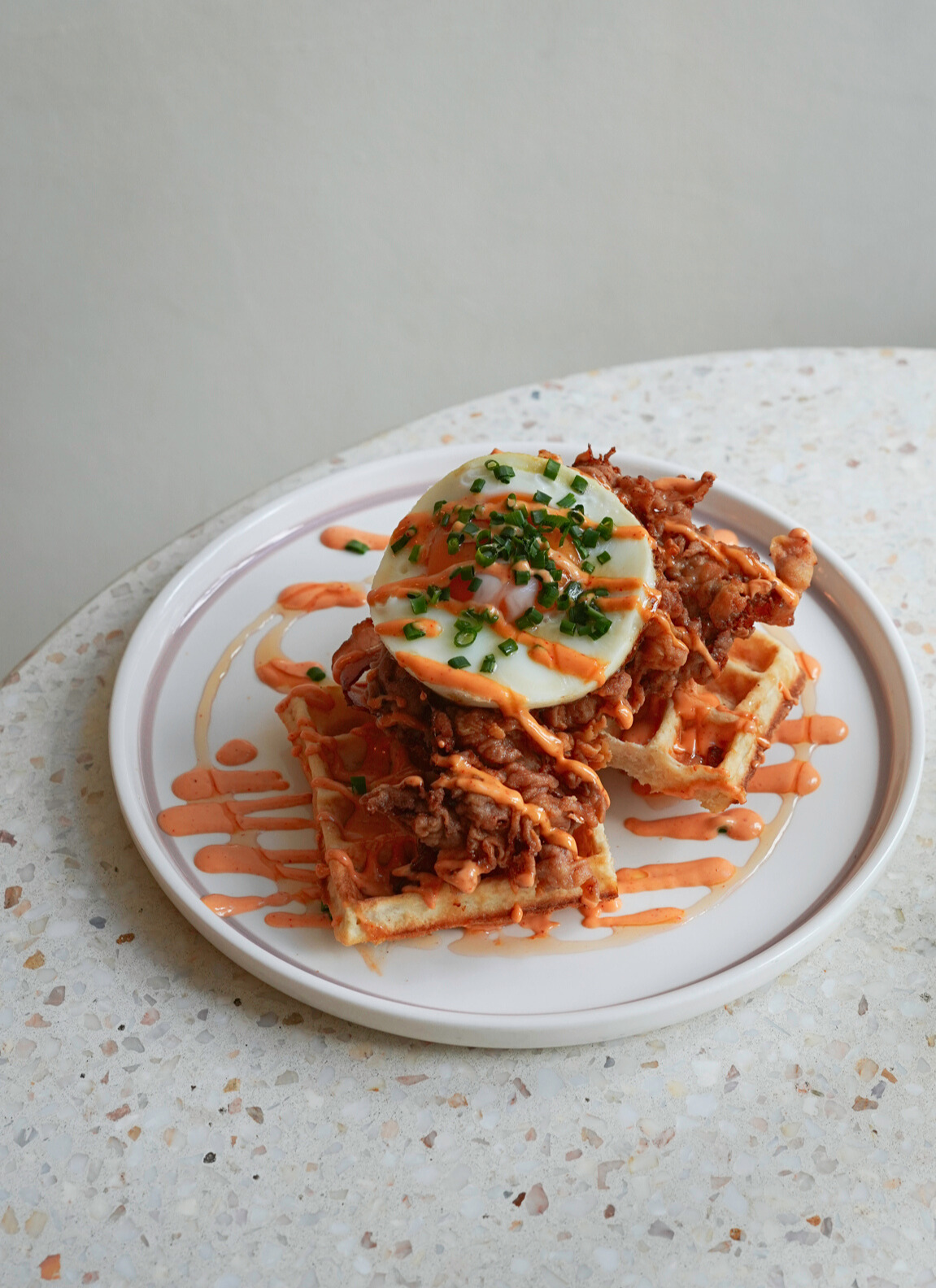
Eggs Benedict on a Waffle
Our tribute to crunch and texture. A perfectly baked, golden, slightly savory waffle becomes the stage for flowing yolk and velvety hollandaise.
This is Brunch in Krakow redefined — bold, textural, and absolutely addictive.
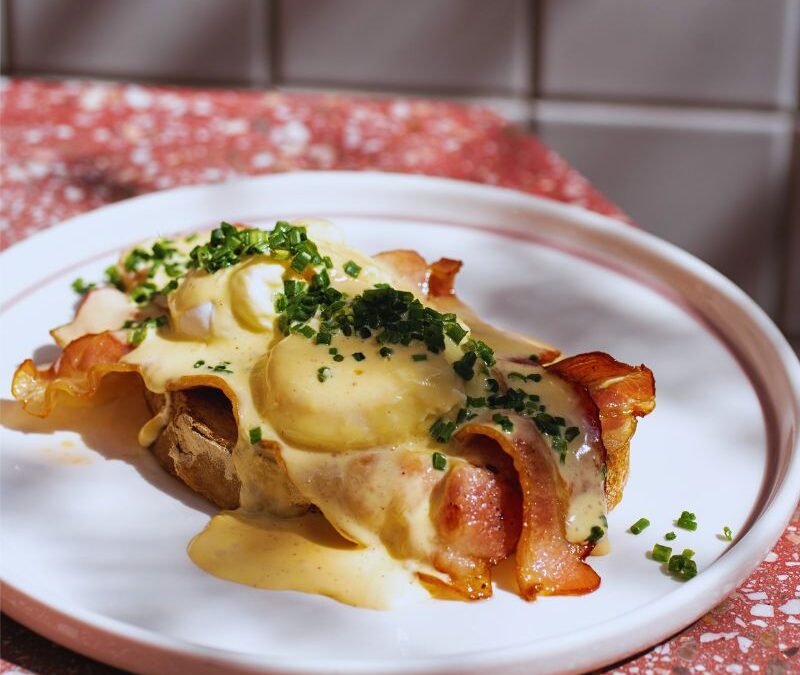
Eggs Benedict on Wheat-Rye Bread
Our homage to craftsmanship and depth of flavor. A thick, aromatic slice of local wheat-rye bread with a firm crust and rustic aroma.
It’s the version for those who appreciate structure and character — where every bite tells a story of balance and quality.
The Breakfast Krakow scene is full of wonderful places — from French-inspired cafés to vegan bakeries — but Lastriko fills a unique niche: the home of the innovative classic.
Tucked inside a historic townhouse just steps from the Main Square, our peaceful green courtyard is the perfect backdrop for the best breakfast in Krakow, far from the tourist crowds.
This isn’t a quick bite. It’s a morning celebration — your ideal Breakfast in Krakow Old Town or the best brunch in Krakow.
Beyond Benedict: The Quest for the Perfect English Breakfast Krakow
Of course, our philosophy at Lastriko doesn’t end with Benedict.
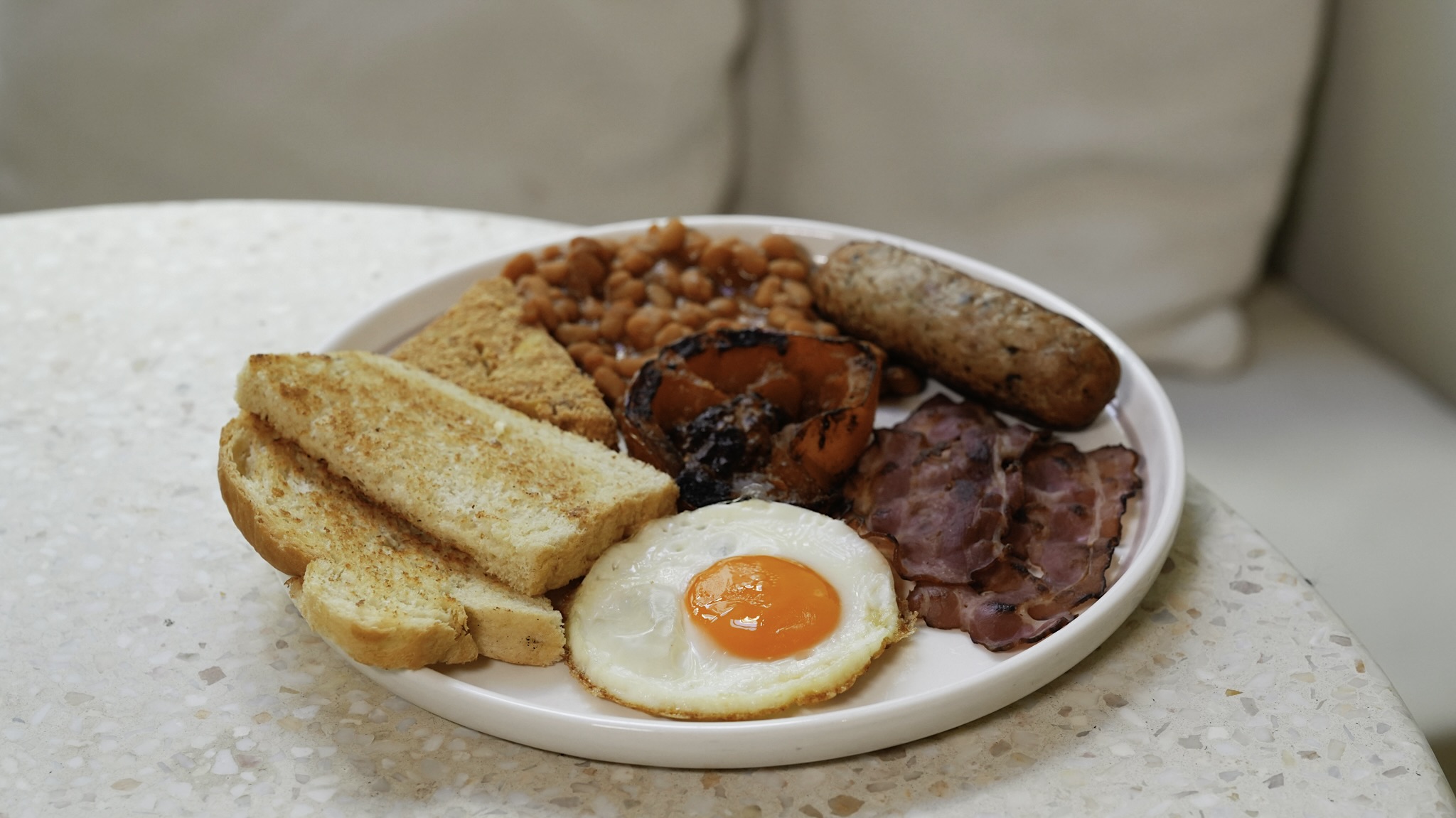
For many of our guests, both locals and travelers, the true test of a great brunch spot — the hallmark of the best breakfast in Krakow — is another legend: the Full English Breakfast.
We approach it with the same philosophy.
While brunch trends come and go, the English breakfast remains a timeless symbol of comfort and satisfaction.
Our English breakfast Krakow is a tribute to that tradition — crafted with premium ingredients, balanced flavors, and respect for the ritual.
It’s not a compromise. It’s another icon we celebrate every morning.
Conclusion: Your Next Breakfast Legend Awaits
Eggs Benedict was born from coincidence and conflict, built on perfect anatomy, and constantly evolving.
From Delmonico’s luxury dining rooms to the Waldorf’s hotel suites to the modern creative kitchens of today — it has always been a dish of transformation.
The history is fascinating — but ultimately, what matters is taste.
Stop searching online for best brunch in Krakow. Come to Lastriko, hidden in the heart of the Old Town, and decide for yourself.
Your verdict awaits:
Will you join the traditionalists with our Benedict on artisan bread — or, like Lemuel Benedict at the Waldorf, embrace the new and discover the breakthrough version served on a crispy waffle?